
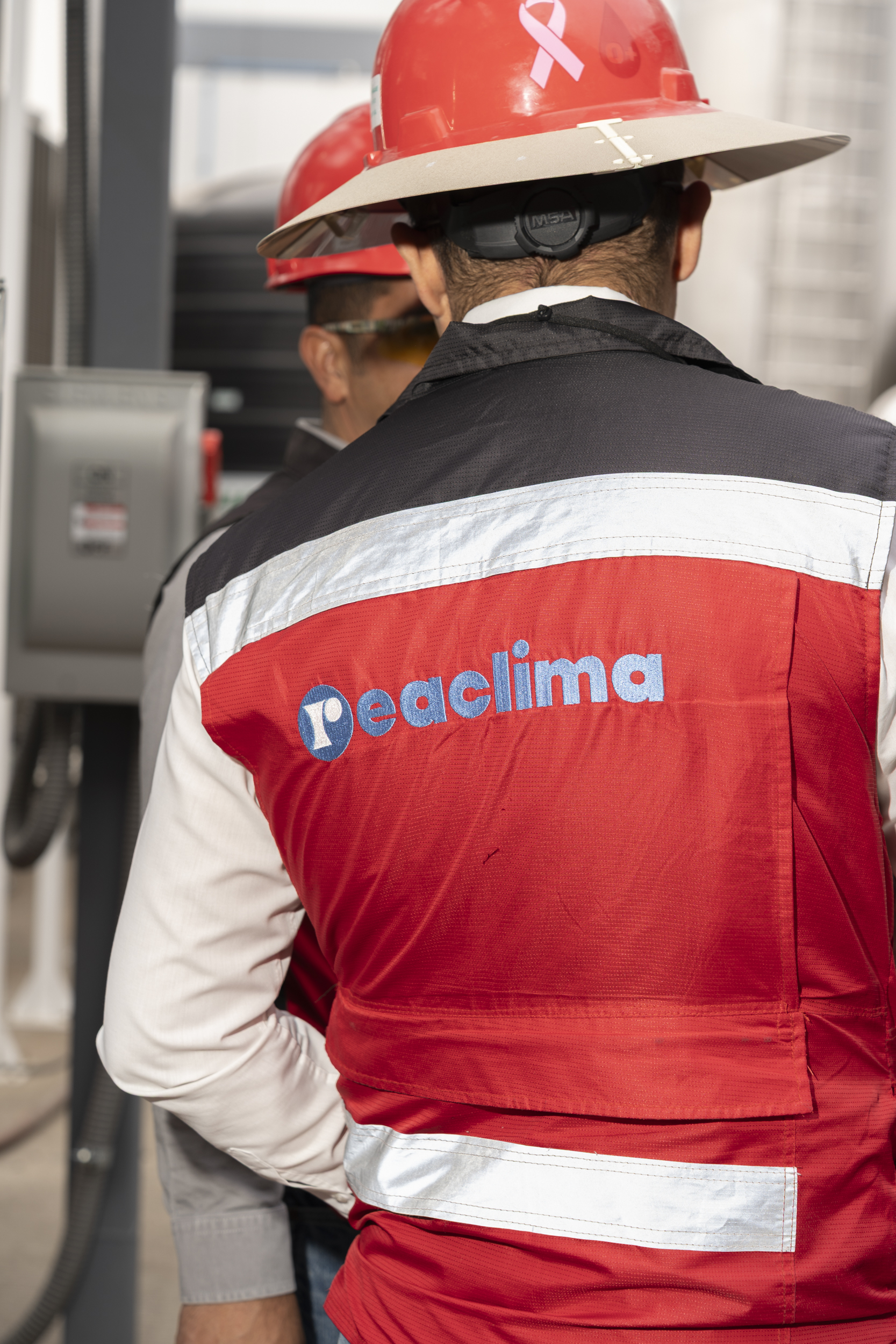
Industrial Safety Culture in HVAC Mexico: Insights from an Expert at Reaclima
Headquartered in Hermosillo, Sonora, with over 50 years of experience backed by 2,500 projects, Reaclima leads in HVAC industrial solutions Mexico, from energy efficient chillers to hospital air purification. Our safety culture transcends regulatory compliance, integrating standards like ASHRAE and LEED to ensure sustainability and certainty in project execution. Miguel Solís, with eight years in industrial safety, embodies this dedication in projects like Foxconn, overseeing protocols that mitigate risks and contribute to milestones like 900,000 accident-free man-hours. "The safety team has been a key pillar, performing functions such as the design and implementation of the safety management system and audits to detect deviations," explains Solís, highlighting Reaclima's teamwork and operational discipline. This achievement is forged through the PM's commitment to a "zero accidents" policy, supported by resources, daily adoption of safe practices —reporting unsafe conditions and using PPE— and prior risk analyses (IPER).
Safety Protocols, Training, and Improvements Ensuring Continuity
Reaclima's industrial safety protocols, aligned with global standards, address specific risks in HVAC installations with meticulous precision. For work at heights —one of the hazards with the highest fatality potential— Solís details hierarchical controls including ground prefabrication to minimize exposure, certified lifelines, and rescue plans, backed by OSHA 1926 Subpart M, ISO 45001, and NOM-009-STPS-2011. In electricity, measures like lockout-tagout (LOTO), tool inspections, and electrical fire controls mitigate failures, in line with NFPA 70E and IEC 60204. "Engineering controls such as local exhaust ventilation, emergency showers, and gas detectors are applied for chemical exposures," adds Solís, citing GHS (UN), NFPA 704, and SEMARNAT standards for safe handling of eco-friendly refrigerants, ensuring not only personal protection but also environmental management.
In hoisting, protocols require crane certification and detailed plans, aligned with ASME B30 and NOM-006-STPS-2014, while in cutting and welding, explosion prevention and fume control are prioritized, according to OSHA 1910 Subpart Q and NOM-027-STPS-2008. These practices, integrated into the EHS system, guarantee operational continuity in projects like data centers or automotive, where LEED energy efficiency demands unyielding precision.
Ongoing training reinforces this framework, with annual programs based on risk analyses and legal requirements like NOM-STPS. Solís emphasizes initial inductions for new personnel, periodic re-inductions, and daily toolbox talks reviewing the day's risks: "Technical courses are delivered for high-risk activities, such as hazardous energies (LOTO) or hoisting maneuvers, increasing technical competence and improving on-site decision-making." This approach directly impacts productivity, reducing accidents and operational stoppages, optimizing installation times, and minimizing indirect costs, while facilitating global client audits and strengthening corporate reputation.
Safety audits illustrate tangible improvements, as Solís details: in specific findings, damaged cables in welding machines, improper chemical storage, or defective slings in hoisting have led to immediate corrections. "Audits allow evaluating protocol effectiveness, resulting in zero lost-time accidents during critical phases and an 80% reduction in unsafe acts," he states, highlighting economic benefits like avoiding fines and greater eligibility for aerospace projects. These examples provide certainty to future clients about our ability to execute projects with robust HSE.
For potential plant emergencies, Reaclima employs a structured system with identification of scenarios like fires or chemical spills, trained brigades in evacuation and first aid, and periodic drills that assess response times. "Drills have allowed improving communication, reducing evacuation times, and optimizing routes," explains Solís, increasing preparedness for real incidents and contributing to 24/7 operational continuity.
Although currently manual, the role of technology in our safety culture presents opportunities, such as real-time monitoring for data analysis. Solís identifies this as a growth area: "An opportunity is identified to incorporate technological solutions that optimize supervision." Reaclima follows international standards like ISO 45001 and ISO 14001 as the base of its EHS system, complemented by OSHA, NFPA, GHS, and ASME, integrated into daily procedures, work permits, and audits that strengthen on-site risk control.
Solís concludes, "the true transformation is cultural: when safety becomes a value, it ceases to be a requirement."
We invite you to contact us to evaluate your projects —from data centers to automotive— and discover how our expertise guarantees continuity and productivity.
